Workplace performance is often talked about in terms of targets, outputs, and results. But behind every performance is a person, and behind every person is a body and mind that can only function at its best when wellbeing is prioritised.
At our recent Roots Health Academy breakfast event, we asked a simple but often overlooked question:
What happens when organisations stop treating wellbeing as an add-on and instead see it as the foundation of sustainable high performance?
Coming from different worlds (one medical, one corporate) we’ve seen the same truth play out in hospitals, boardrooms, and high-performance environments – if people are running on empty, performance suffers.
The science: why wellbeing is performance
Over the past 30 years, the evidence has become increasingly clear: health isn’t just the absence of illness. It’s about creating the conditions in which the body and mind can thrive.
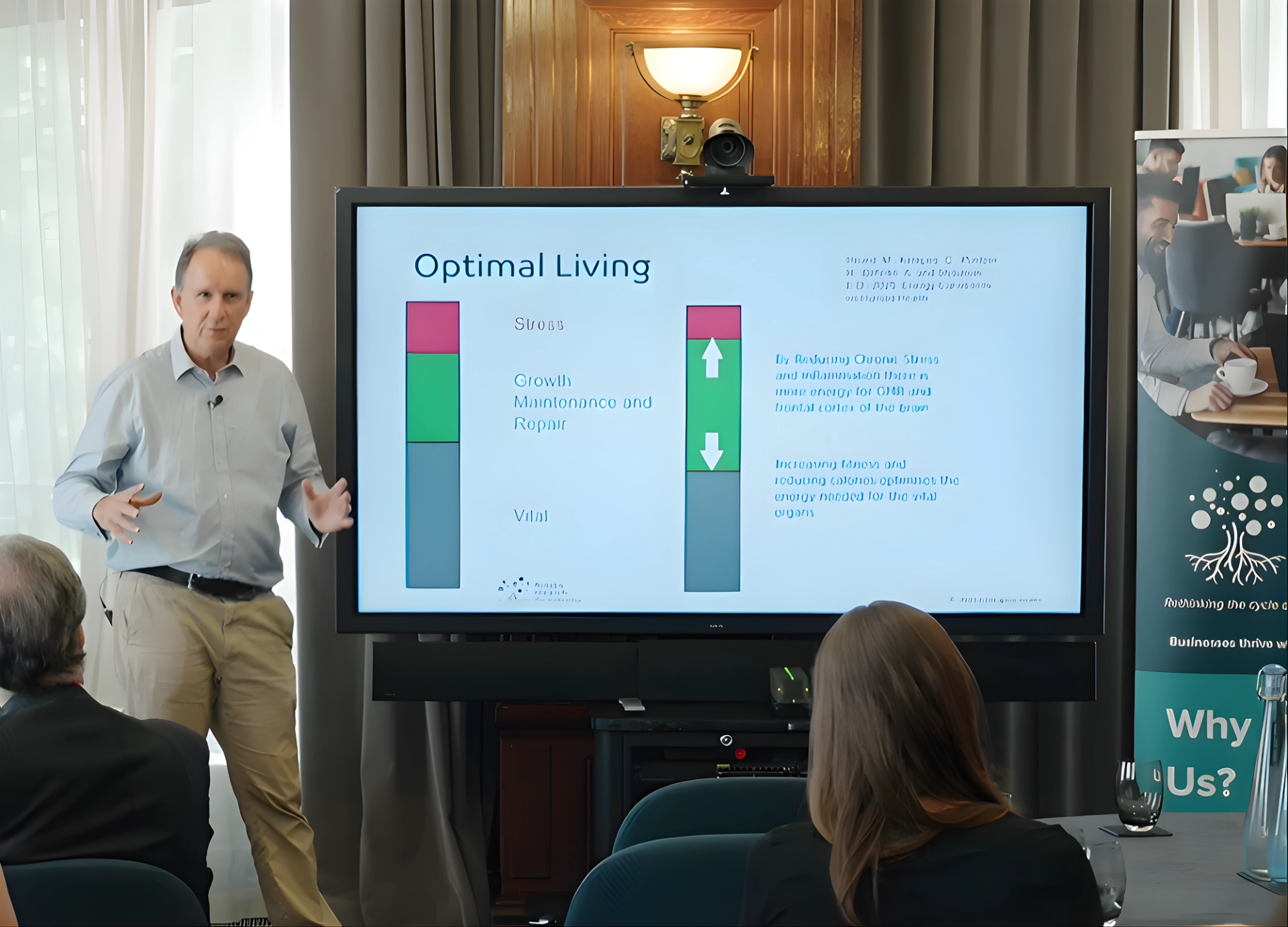
Stress is a useful starting point. Acute stress (the adrenaline of a big presentation, the nerves before a race, the challenge of a tight deadline) can actually sharpen our performance. But chronic stress is something else entirely. When stress is unrelenting and people feel out of control, cortisol levels stay elevated, sleep deteriorates, energy is drained, and creativity shuts down. Over time, this doesn’t just reduce performance – it undermines health itself, leading to burnout, cardiovascular disease, and depression.
Three things consistently buffer against this:
- Safety – both physical and psychological. As human beings, we are wired for survival. If we don’t feel safe, the brain is on high alert and energy is diverted away from creativity and collaboration.
- Value – feeling that your contribution matters. When people feel valued, they are more motivated to give their best and protect what they’ve built.
- Belonging – being part of a community with shared purpose. Humans evolved by collaborating; when trust and belonging are present, we achieve more with less effort.
When these needs are met, people move out of survival mode and into performance mode. And the bridge between the two is trust. Research shows that high-trust workplaces are 50% more productive, with employees reporting greater energy, engagement, and loyalty.
Survival mode at work
These scientific insights play out every day in the workplace. Too often, organisations unintentionally keep people locked in survival mode. Such as working in environments where the CEO openly admitted, “I don’t really care about solving this mistake right now, I just want to know who’s to blame.” In that kind of culture, everyone is scanning for threats, avoiding mistakes, and protecting themselves – not innovating, collaborating, or performing at their best. Let alone enjoying themselves!
In survival mode, our behaviour narrows. We:
- scan for danger instead of opportunities
- react quickly rather than think strategically
- avoid risks and play it safe
- protect ourselves rather than trust others.
This makes sense when there’s a real threat to your life. It doesn’t make sense when you’re in a meeting trying to articulate your thoughts or ideas.
In performance mode, we switch to parasympathetic nervous system and switch off ‘fight or flight’ sympathetic nervous system. People share ideas, challenge the status quo, and embrace diversity of thought. They take smart risks, innovate, and push beyond their comfort zone. But to get there, leaders must create environments of psychological safety – where people feel able to speak up, challenge, and bring their authentic selves without fear of blame or backlash.
Policies alone won’t do this. It’s not enough to say you have a wellbeing programme or a flexible working policy. Culture is shaped by everyday behaviours. Whether leaders role-model healthy boundaries, whether managers are consistent in their expectations, whether people feel their contributions are genuinely heard and valued.
Recovery as part of performance
One of the biggest myths about performance is that it requires us to stay at 100% all the time. Elite sport shows us the opposite. Formula One drivers, for example, operate under extraordinary pressure during race weekends. But recovery is treated as essential, not optional. As Luke Robinson from Atlassian Williams Racing notes, in high pressure environments recovery can be seen as “a luxury for all except the elite athletes who run the race or drive the car”.
In corporate life, we often ignore this truth. People are expected to work at 80 to 100 percent intensity all year round, without the troughs that make the peaks possible. No wonder so many are exhausted. Luke reminds us that even in elite sport:
“Elite athletes are standing on the shoulders of hundreds of unsung heroes who need rest and balance in exactly the same way. And when organisations get recovery right, he says, it becomes “a source of competitive advantage… on the track or in the market”
Recovery does not always have to mean long holidays. It can be built into the fabric of the working day:
- A clear policy that overtime is balanced by time off in lieu and that leaders use and promote it.
- Protected focus time, where people know they will not be disturbed.
- Micro-recoveries during the day, stepping away from the screen, taking a walk, or simply boiling the kettle without checking emails.
These moments allow the nervous system to reset, prevent chronic stress from building up, and sustain energy over the long term.
Prioritisation and the myth of priorities
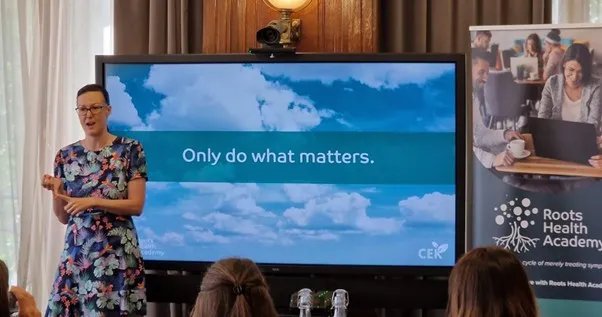
Another cultural trap we often see is the way organisations treat everything as urgent. Somewhere along the way, the word “priority” was turned into “priorities” – but the truth is, we can only ever have one at a time.
When everything is a priority, nothing is. People end up stretched thin, overloaded with meetings, and constantly firefighting. The result? Burnout, inefficiency, and so many missed opportunities.
Leaders need to get braver at deprioritising. That means asking:
- Does this project really need all seven people in the meeting?
- Could this update be an email instead of a call?
- What are the top three outcomes we want this quarter, and what can we consciously set aside for later (or even never)?
The cost of wasted time in unnecessary meetings and endless back-and-forth is huge – not just in money, but in the human energy it drains. Stripping away noise allows people to focus on what really matters, and to deliver at their best.
Where science meets culture
The beauty of combining medical science with organisational practice is that it shows us two sides of the same coin. The science explains what the body and mind need to thrive; the workplace context shows how culture can either enable or undermine it.
When organisations create environments where people feel safe, valued, and connected, they don’t just improve wellbeing. They unlock creativity, innovation, and loyalty. And when leaders role-model recovery and prioritisation, they give their teams permission to do the same.
Wellbeing isn’t about softening expectations. It’s about unlocking the very conditions that make high performance possible.
So, what can we do?
Our challenge to leaders is simple:
- Where in your organisation are people stuck in survival mode?
- What noise, ambiguity, or toxic behaviours are draining energy?
- And what one change could you make now to help your people move from survival into performance?
Because in the end, performance and wellbeing aren’t two separate agendas. They are the same agenda. If you want your business to thrive, your people need to thrive first.
By Dr William Bird, GP and CEO of Intelligent Health, and Clare Kenny, Leadership, Culture and Wellbeing Consultant
For more insights like this, and more expert perspectives on workplace wellbeing, health creation, and building thriving organisations, subscribe to our newsletter, The Roots Roundup.