Finding your rhythm in natural light
As we transition from the gentle unfurling of spring into the high energy of summer, I often see a shift in my clinic. Patients arrive feeling ‘wired but tired’. Often, the invitations start piling up, the school term hits its peak, and our social diaries explode. It’s a wonderful time for connection, but from a hormonal perspective, it can feel like you are walking a tightrope.
As a GP, I’m fascinated by how our environment dictates our internal chemistry. ‘Health’ is what we eat or how we move, but where we spend our time is just as vital. Our hormones, especially cortisol, serotonin, and melatonin, are deeply sensitive to the seasons. In many ways when we lose our connection to the outdoors, we may be losing our anchor. Simply put, our bodies are designed to take cues from the sun to know when to be alert and when to repair. In our modern, indoor lives, those signals get muffled.
In this article, I want to talk to you about the power of an ‘outdoor prescription’ for your wellbeing. It’s not just about a nice walk; it’s about using the outdoors as a clinical tool to regulate your blood pressure, settle your nervous system, and reclaim your sleep. Let’s look at how we can navigate this seasonal shift by syncing our busy lives with the natural world.
Did you know the first hour of your day is your ‘Master Regulator’?
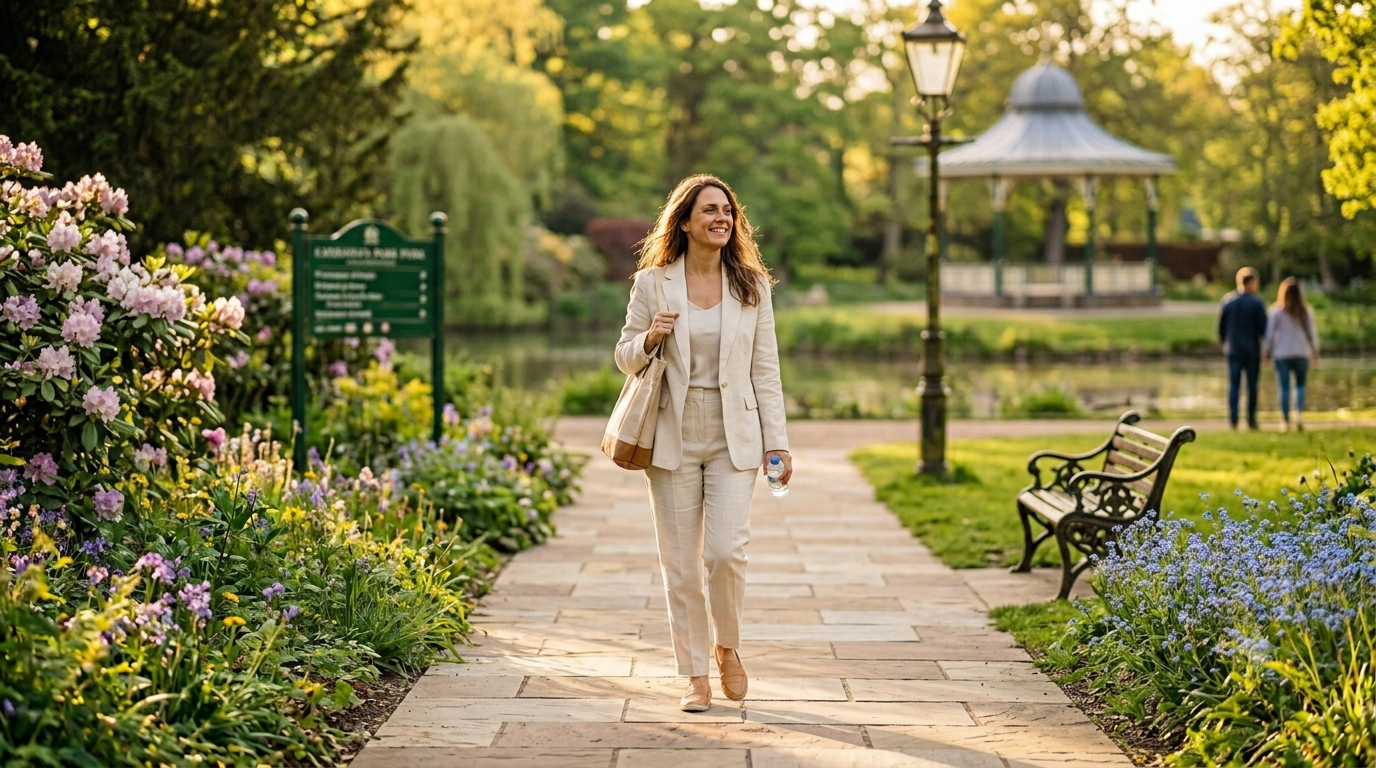
If you want to reduce the midday brain fog, step away from your smart phone and dedicate some time to the outdoors first thing. Early morning light exposure helps regulate leptin, the hormone that tells you when you're full, so you feel more satisfied and fewer cravings. If first thing is tricky, no problem, getting outside before noon sets your internal clock, making it much easier to drift off when the summer evenings stay bright.
Can you find 3 minutes for your wellbeing?
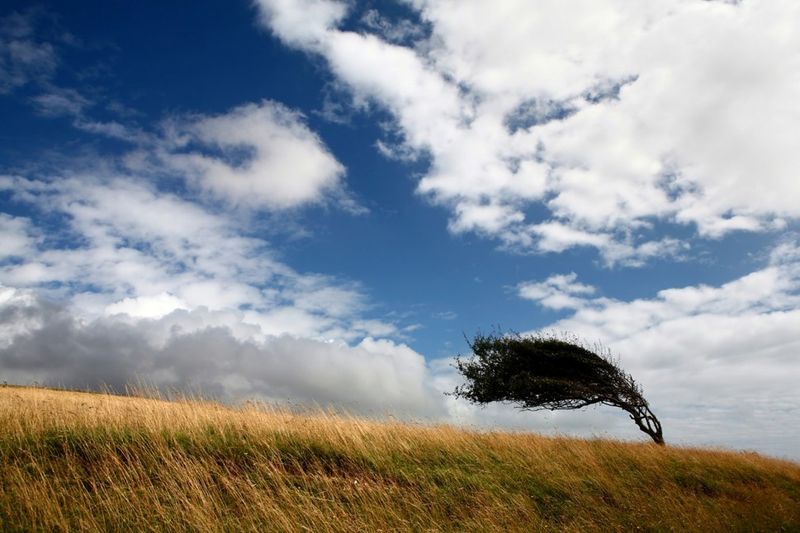
In my practice, I often talk about ‘micro-habits’. These are slow and steady changes that lead to a physiological change in your body. Perhaps you can walk around your garden, block or carpark first thing? Research shows that just 180 seconds in a green space can lower your cortisol (the stress hormone) and bring down a rising blood pressure. If you’re stuck in back-to-back meetings, please, open a window. The movement of fresh air and the visual connection to the outside world can dampen the ‘fight or flight’ response. This is a simple intervention for anxiety by engaging the calming parasympathetic system in our body. Furthermore, standing by an open window or taking your lunch outside is an effective cognitive reset. Watching the way tree branches or clouds move is taking in fractal patterns found in nature which allows recovery from the fatigue of staring at screens.
What about Perimenopause and Menopause?
Sleep can feel like a battlefield for individuals navigating perimenopause or menopause, which the longer daylight hours or warmth, can make worse. Getting outdoors in natural light triggers serotonin production. Not only does this keep your mood stable during the day, but serotonin is the direct precursor to melatonin, which is your sleep hormone. Physiologically, if you get out in the first half of the day, you are gearing your brain to release melatonin 14 hours later. This is natural, hormone-led way to combat insomnia, along side other strategies such as a cool ventilated room, timely closure of blue screen light, moderating alcohol use with nights off and eating at least 3 hours before sleep.
My advice to you
I know life is busy, my advice is take small steps for big changes over time. Invest little and often and you will find the joy of spending time in nature rather than it feel like another chore. Here are some easy suggestions:
- Buffer before work: Whether you’re heading to the office or the shops, park a five minute walk away. That brisk walk is your transition period to to breathe and reset.
- Capture light when you can: If possible, can you move your desk to face a window? The "lux" (light intensity) you get from being near a window is significantly higher than a standard lightbulb, and your hormones will thank you for it.
- Your Habit: Before you start your day, step outside. Just for a minute. Feel the air on your skin. It tells your nervous system that it’s safe, it’s morning, and it’s time to wake up.
You’re worth it: Connection with others is the soul of summer, but connection with nature is the heartbeat of your health. Take the walk, open the window, and let the outdoors be your medicine this season.
Dr Radhika Vohra
MBChB, BMedSci, DCH, MRCGP(2006), DFRSH & FRT, MCPD
Non-Principal NHS GP Locum, Menopause Dr

Dr Radhika Vohra
GP and Women's Health
Dr Radhika Vohra is an experienced GP specialising in women's health, menopause and education. She has spent more than two decades supporting women through every stage of life and is a trusted voice in hormonal health and wellbeing. Her master class helps women understand how hormonal shifts influence body and mind and empowers them with tools to regain energy, balance and confidence during life transitions.